
Crowned with Horns
Why our goats have horns and why it matters

The culmination. The trophy. The literal crown of an ancient animal that comes to life from a fairytale. That is how horns and antlers are often seen. Think about it, from hunting across continents to catching a glimpse on a hike to seeing an impressive hornset on a goat, we are instinctively drawn to these bony spires. And while they are glorious to look at, there is so much more happening.
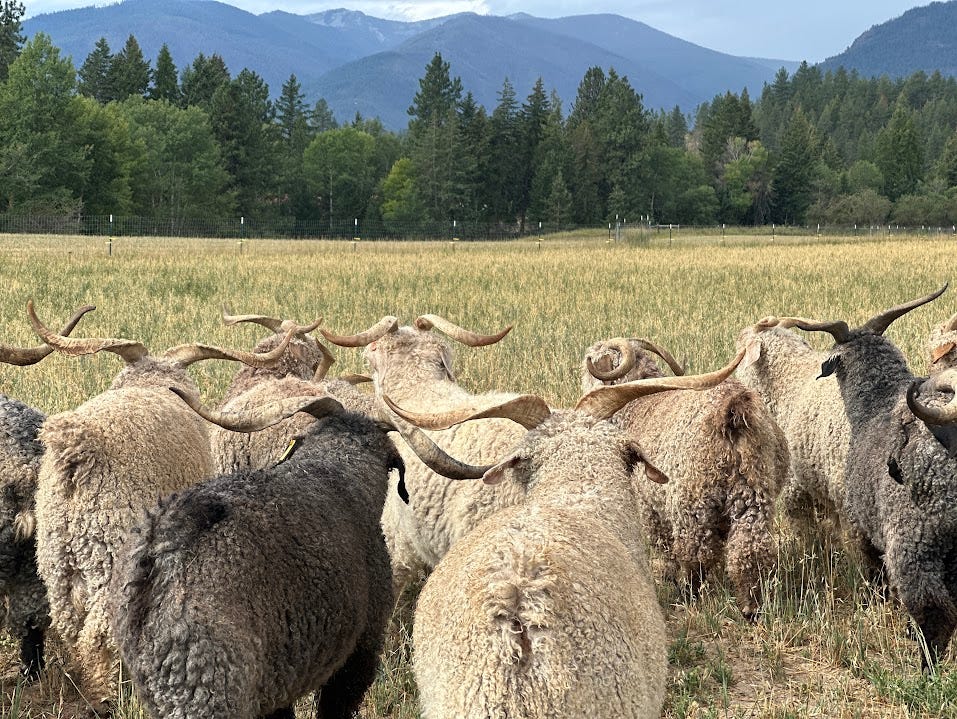
There are many myths surrounding horns, so let’s warm up with a little myth-busting. First off, horns and antlers are not the same. To put it simply, horns are permanent, and antlers shed annually. Antlers are structures of bone that grow out from the skull and are most often seen in males. Horns have a bone core covered in keratin and continually grow. They are seen in both males and females.
Second, many people dehorn their goats because horns are viewed as dangerous. I have many problems with this because if an animal is born with horns, there must be a good reason why. Many people don’t even think about it because it’s “just what’s done”. Dehorning or debudding, as it is sometimes called, is not a pleasant process. The horn is literally burned off. And if you raise the animal correctly, they should never use their horns in a dangerous manner.
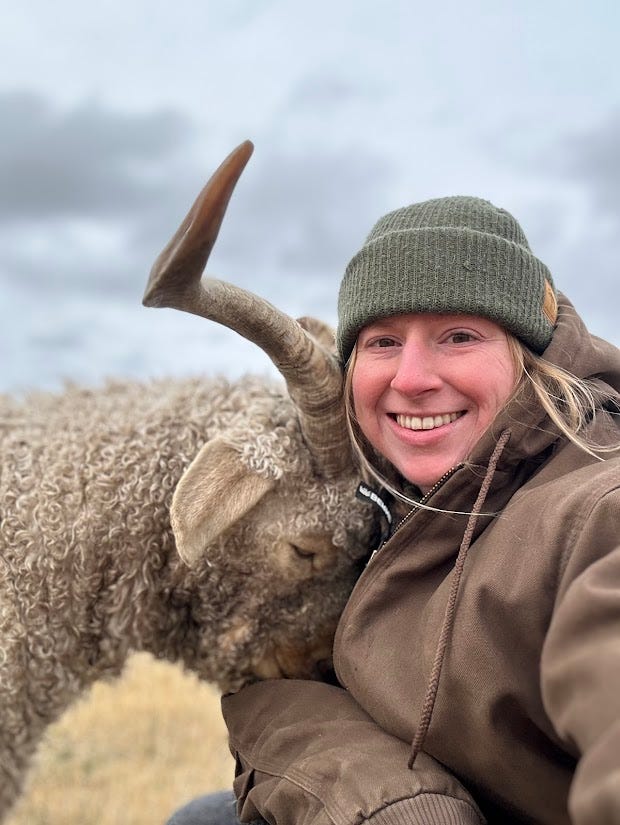
Now we raise Angora goats. If you don’t know what those are, think of a sheep because that’s what most people think they are. Angora goats are not for meat or milk but mohair. That’s right, there’s a third option for goats and it’s FIBER. Mohair is what they produce and it grows in thick, silky, curly locks. Mohair grows an inch per month and I shear it twice per year. Each goat produces about 8-10 pounds of mohair per shearing season. We have over 75 goats so thats over 1200 pounds of mohair per year. Yes, that’s a lot of mohair which is why my mom created her own company called Caprine where it’s made into mohair socks and throws. Now let’s keep the train on the tracks here.
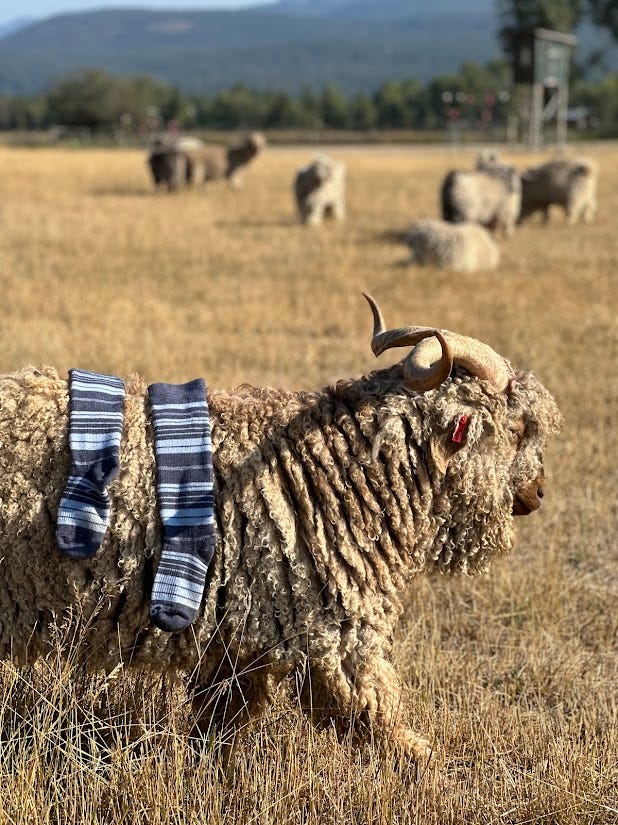
You can imagine with all that mohair, that can get pretty warm in the summertime. This, ladies and gentlemen, is where their HORNS come into play. While horns have many uses, this is the most critical because this is what keeps them from overheating. Since horns have an active bone core beneath the keratin, it has an active blood supply.
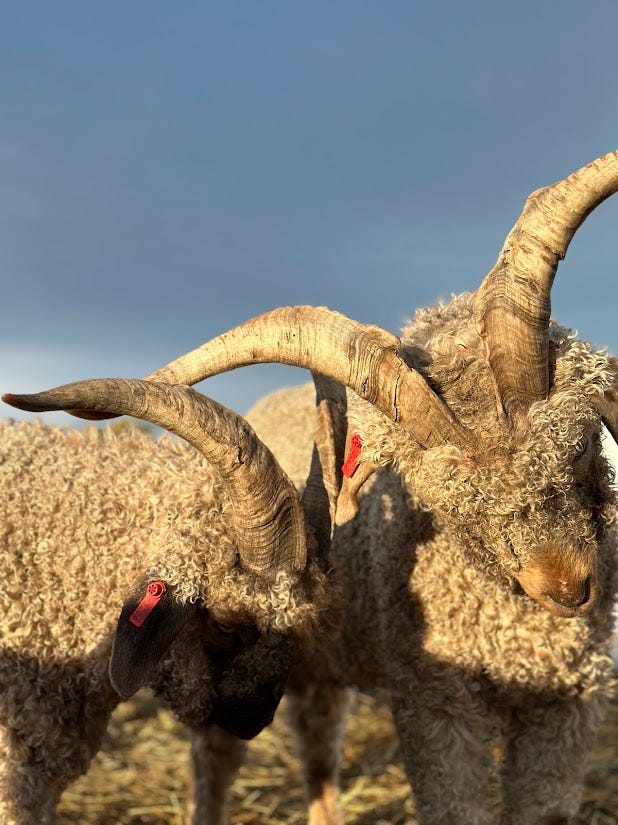
Blood is a thermoregulator. And since horns are “outside of the body” there is a passive heat exchange between the blood in the horn and the air surrounding the horn. Thus, horns work as an AC unit for the goat. When the hot bloods enters the horn, the air cools it, and then cooled blood is sent back into the body. Now if you don’t believe me, I graduated just a few years ago with a Bachelor’s degree in Wildlife Resources which basically translates to a vast amount of biology classes. One of those classes, Biology 483 (Mammaology), literally went over this. I’ll also post a link to a fantastic scientific article that also addresses this at the end of this blog post.
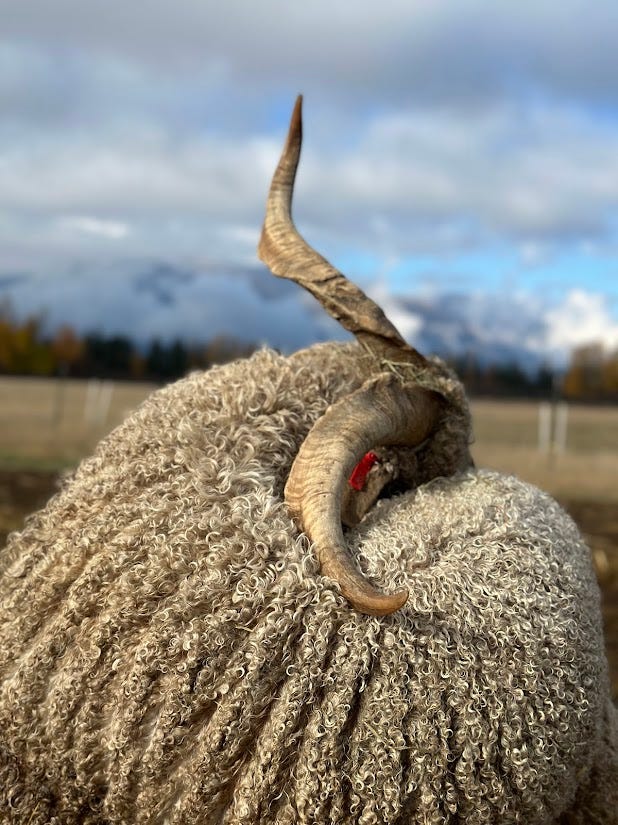
So, for the very health of our goats, they retain their horns. Horns are also very practical when it comes to catching and grabbing goats. Does this hurt the goat? Long answer: no. Short answer: I recommend you grab by the base of the horn as that’s where it is strongest. Also, don’t grab young horns as they are still fragile and growing. We only start using their horns when they are at least a year old and even then we are very careful.
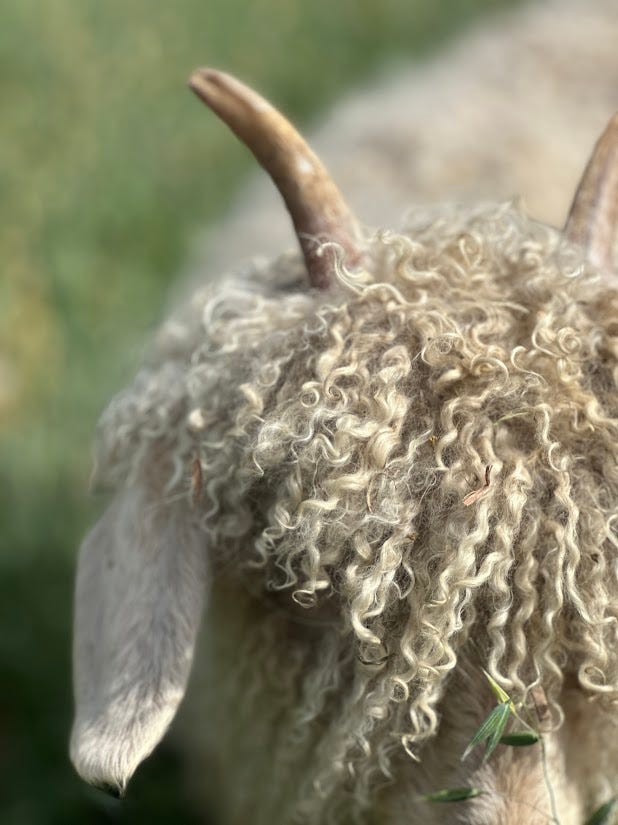
And, like people, horns come in lots of shapes and sizes. This is where genetics comes into play because not all horns are “good horns”. Some are railroad tracks, leg breakers, too high, too low, etc. The perfect hornset is where the horns are wide apart, form a V-shape, and are not too high or too low. That is what we breed for, and it is an important aspect to watch for if you have goats and are thinking of breeding. Because if the horns are too close or too narrow and a leg gets stuck in there, it can turn tragic in a millisecond. And I unfortunately say that from experience. This is one of our criteria for our male goats. If their horns are too narrow, they become a wether (neutured male). I don’t care how amazing their fleece is because the risk is too great.
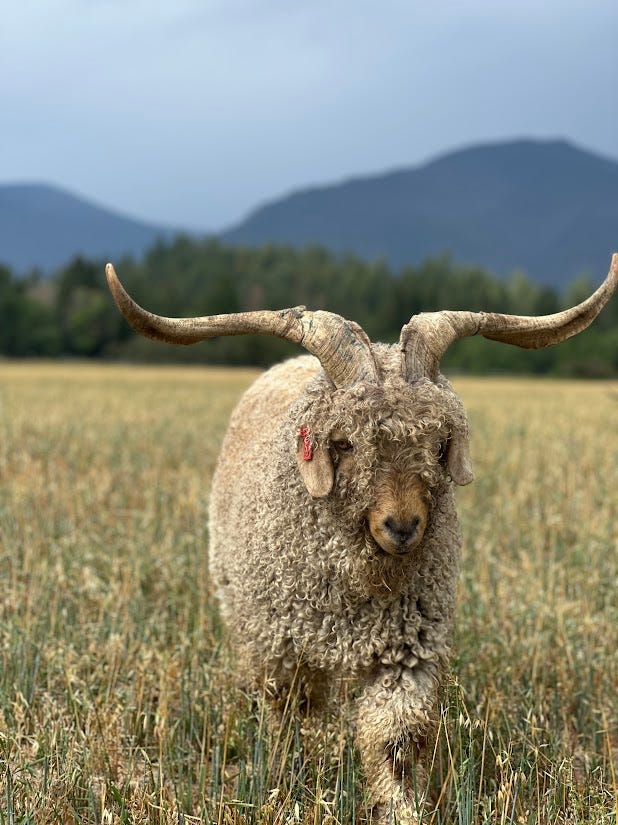
And you may be wondering, well what does wethering do as the horns are still there? Yes, the horns are still there because what are we not going to do? Say it with me, “We do not dehorn”. Even if the horns are not a good shape, the goat still needs them. What wethering does is remove the raging testosterone that would influence the buck to get into sparring matches. For does (female goats), this is not as big of deal but we still do not want narrow horns. So any does that we have that we want to breed and they have narrow horns, we purposefully breed to bucks that have very wide horns. Thus, improving the next generation.
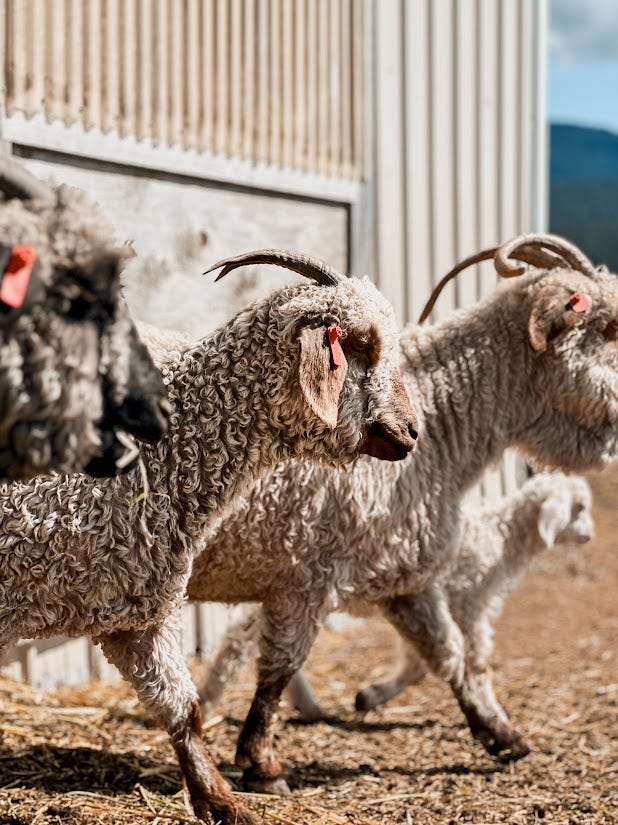
Horns that are too low can cause a lot of rubbing between the horns and the fleece, which is not desirable, and horns that are too high can get caught more easily in fencing and other goats’ horns.
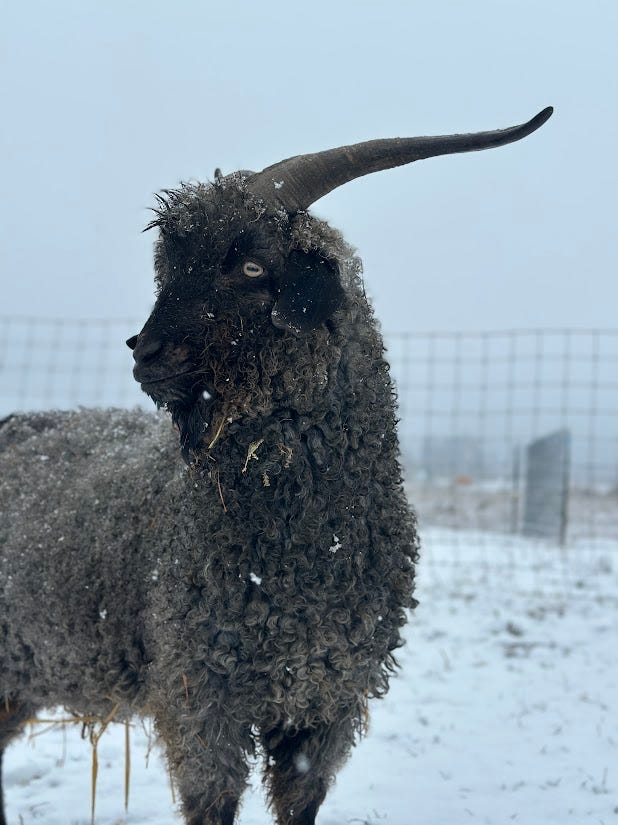
Doe and buck horns are very different from each other. While neither stops growing, it is much more notable with the bucks. Their horns are the true crowns. They grow thicker with every passing year. They grow out and spiral, often reaching more than 4 feet in length from tip to tip. Quite an impressive sight!
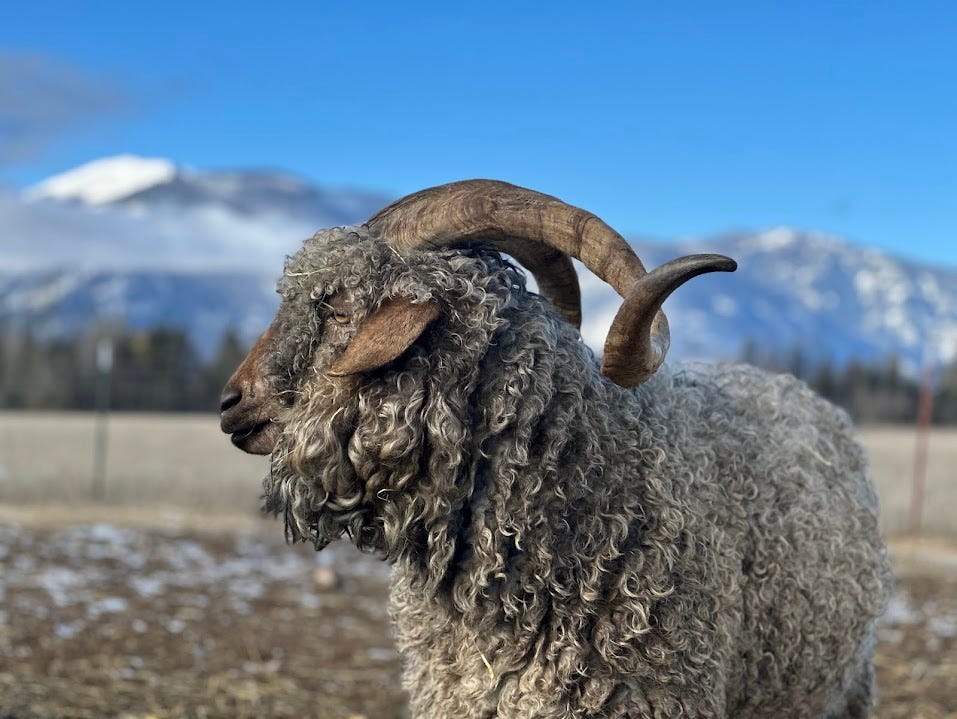
Doe horns actually come in a variety of shapes as some grow out more like bucks and others grow in more of a curl. I often get asked if we ever have to trim them and we sometimes do with the does depending on how their horns are growing. Sometimes they curl back to their skull and we have to trim those back every shearing season. I just use my dad’s horse hoof trimmer and make sure I don’t get too close to the blood supply. I then rasp them to smooth them out. Pretty simple.
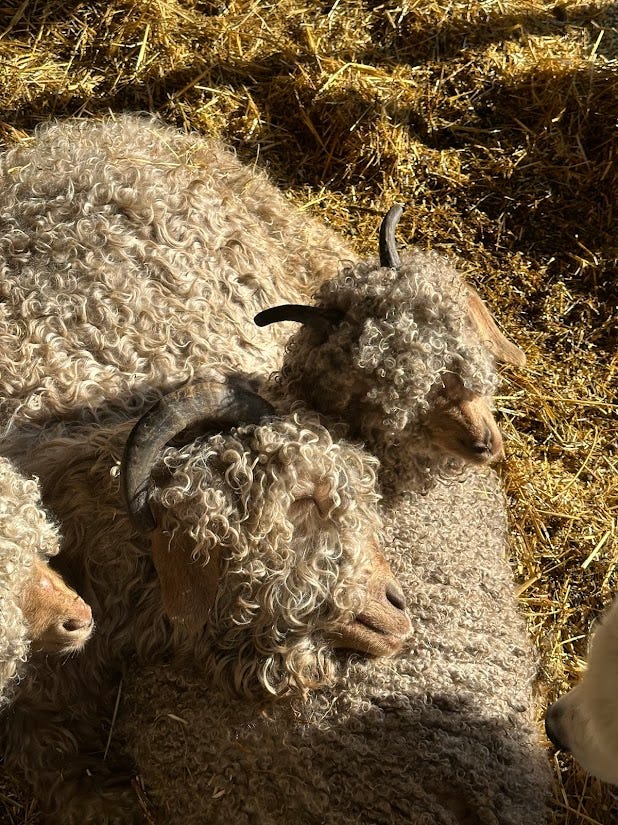
Now sometimes they can break their horns. This always requires an immediate rush to the vet because of the blood supply. It looks horrendous and is quite scary. Sometimes they can lose their horn that way but often the vet is able to salvage most of it. But that is a very rare occurrence. In our 20+ years of raising goats, it’s only happened a handful of times.
Angora goat kids are born with horns but they remain under the skin for about 2 weeks before you can see them. They then never stop growing until death. Buck horns grow much faster than doe horns. Bucks also do a lot of headsmashing and there probably is some “who has the bigger hornset?” that goes on. Bucks will be bucks. But we raise our’s to be very respectful and they have never used their horns in a dangerous manner against us. That is incredibly important. Sometimes they’ll forget where they are and knock us with one but never with a malicious intent.
So what have you learned so far? That horns and antlers are not the same, that Angora goats need their horns, that they come in many shapes and sizes, that shape is important, and so much more. Well done! I think that’s a good overview on horns and how amazing they are. A true crown.
If you’d like to see more impressive Angora goat horns, check out my facebook and instagram page Red Falcon Ranch
And I highly encourage you to check out our mohair goods at shopcaprine.com
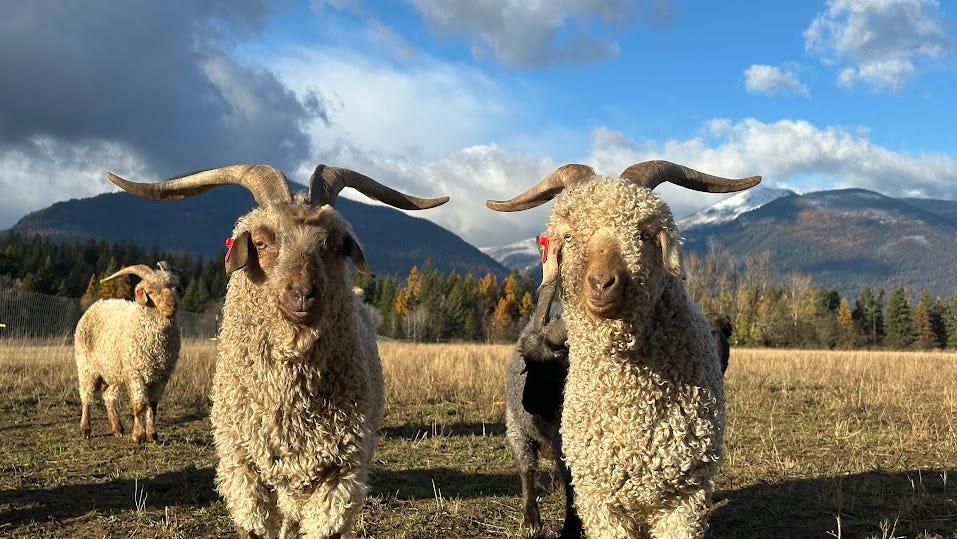
Scientific article: https://www.journals.uchicago.edu/doi/abs/10.1086/physzool.39.2.30152426
You have a very nice way of educating the reader, and i really love your ig posts as they put a smile on my face everyday 🤗
Thank you for sharing your knowledge! I love goats and sheep with horns ♥️